Why I Think Men Need a Different Approach to Therapy
As someone who has been personally invested in building a relationship with my husband for over two decades, and who has worked with men in a therapeutic environment, it has become very evident to me that men often need a different approach to therapy than women do.
Don't get me wrong there are certainly similarities. However, generally speaking, the experience is quite different.
Allow me to break it down from lived experience.

Why Many Men Experience Therapy Differently
They don't want mushy. They want direct and straightforward.
They want authenticity, not therapeutic jargon.
They want space to be frank and authentically themselves. They want to swear if they want to.
They want space to make sense of things through a logical lens.
They don't want to be met with too much empathy, otherwise it can sound like pity.
They don't want to wallow in the past. They want forward movement.
Many men have been influenced to be independent, self-sufficient, not ask for help, and simply figure things out on their own. There is often an unspoken understanding that men are not to be seen as weak and are better off relying on themselves.
But men need support too. They are looking to be seen and validated in their struggles. They've been living within societal constructs that encourage them to keep it all in, disconnect from their feelings, and value assertiveness, sometimes even dominance, over vulnerability.
Yet time and time again, I have a similar experience: men often don't realize how hard they are working to contain it all. The slightest invitation to acknowledge that containment can lead to feeling seen, and honestly, sometimes even that is almost too much.
What I have come to appreciate is that beneath the armour is often a tremendous amount of responsibility, pressure, and care that rarely gets acknowledged. Many men have spent years carrying burdens without ever having a place they can trust enough to set them down.
Meeting Men Where They Are
One of the most important aspects of providing counselling for men is meeting them where they are. Respecting their capacity, protective parts, physiology, beliefs, and the environments they have to live within.
Real change doesn't happen by forcing vulnerability before someone is ready. It happens by creating enough safety, trust, and respect that vulnerability naturally becomes possible.
I am often acutely aware of how power dynamics can occur in therapy, let alone as a woman working with men. I am always striving to deconstruct the power differential and move into shared power, because shared power is infinite.

Why Men Choose to Come to Therapy
Here are some of the reasons men come into therapy:
They are tired of feeling stagnant in their relationships.
They are sick of being angry or frustrated all the time.
They want to learn how to feel more confident in everyday life and relationships.
They want to get out of "fix-it" mode with their partners.
They want to be better fathers.
They want to understand themselves more deeply without losing who they are.
Among many other reasons.
Counselling for men offers a space to create their own healthy definition of what it means to be a man, not one handed to them by society, family, or culture.
Seeing a therapist doesn't mean you have problems. It means you care enough about yourself, your relationships, and the people you love to become a healthier version of yourself.
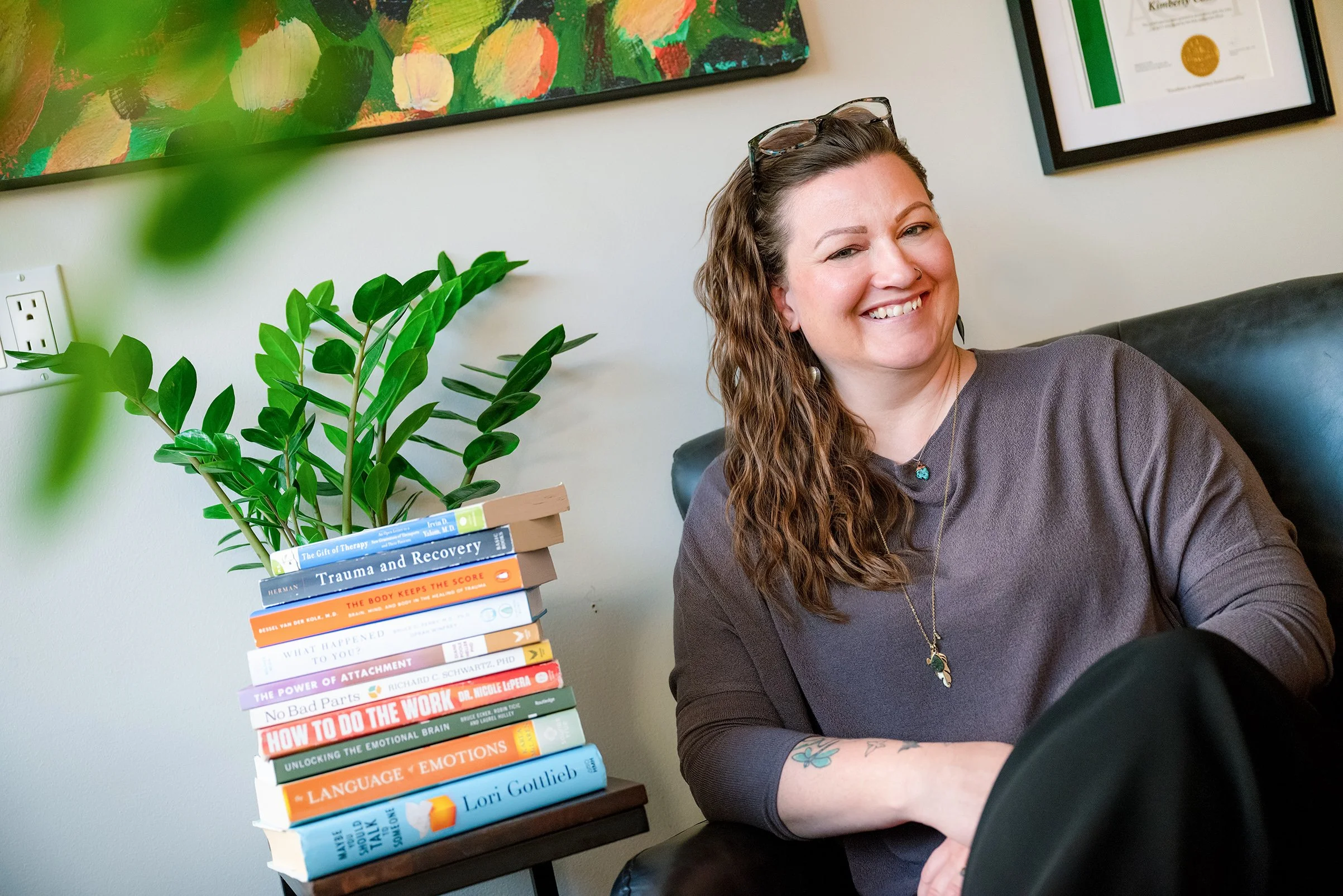
Guest Contributor
Kimberly Castle MTC, RCS, CC-BRT, SEP®
Kimberly Castle is a Somatic Experiencing Practitioner® and a registered counsellor with a private Kelowna Counselling practice. She focuses on healing relational trauma, supporting the development of healthy relationship skills and the mentorship of emerging counsellors.